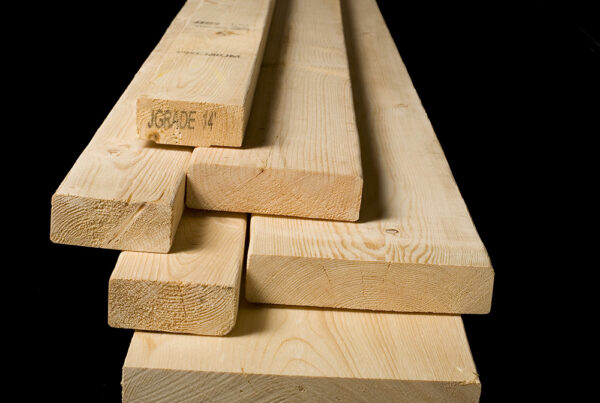


Look closely at a lumber grade stamp, and you’ll notice the grade is only half the story. Right beside it sit initials like WWPA, WCLIB, or SPIB. Those aren’t decoration — they tell you who stands behind the grade.
A grade means nothing without a source
A stamp that just says “No. 2” doesn’t say who inspected the board or what rules they used. Grading agencies train graders, set inspection standards, and certify that lumber actually meets the grade it claims. Without their mark, a grade is just a claim.
Different agencies cover different regions and species
Groups like the Western Wood Products Association and the Southern Pine Inspection Bureau grew up around the species and regions they know best. A board graded under one agency’s rules was inspected against standards built for that specific wood, growing region, and mill practice.
The initials point to a specific rulebook
Every agency publishes its own official grading rules, approved by the American Lumber Standard Committee. The initials on a stamp tell you exactly which rulebook the board was measured against.
They also signal accountability
Agencies inspect and audit the mills authorized to use their stamp. If a mill misuses a stamp or grades a board incorrectly, the agency can investigate and correct it.
Why it matters when you’re buying
The grade tells you how a board should perform. The agency’s initials tell you who’s responsible for that promise. Together, they mean a board graded in one part of the country will perform the same as one graded somewhere else.