

Most people don’t think of lumber grading as a byproduct of war. But many of the standards that shape how boards are inspected, stamped, and sold today trace back to the pressures of World War II. When the war created massive demand for wood, it also exposed how badly the industry needed consistent rules.
The War Created an Unprecedented Demand for Lumber
World War II required enormous quantities of wood almost overnight. Military bases, training camps, shipping crates, aircraft components, and temporary housing all depended on lumber. Shipbuilding alone consumed huge volumes of specific species and grades. The government needed a reliable way to know that a shipment of lumber would actually perform as promised, whether it was going into a barracks in the Midwest or a shipping crate headed overseas.
Inconsistent Grading Became a Serious Problem
Before the war, grading rules varied widely between regions and mills. A board graded in one part of the country might not match the same grade from another region, even if the label looked identical. During peacetime, this inconsistency was an inconvenience. During a global war, it became a liability. Military planners couldn’t afford to gamble on whether lumber would hold up in construction, transport, or combat-related use. The pressure to standardize grading rules intensified almost overnight.
Wartime Efficiency Demanded Better Use of Every Board
Wood was a strategic resource, and waste was unacceptable. Mills were pushed to maximize the usable lumber from every log, which meant grading standards had to become more precise. Graders needed clear, consistent rules for identifying defects, strength characteristics, and appropriate end uses. This shift toward precision during the war carried over into peacetime practices, since mills and agencies had already built the systems to support it.
Government Involvement Pushed Standardization Forward
The federal government’s role in coordinating wartime lumber supply gave regional grading agencies a reason to align more closely with shared standards. Agencies like the West Coast Lumber Inspection Bureau and the Southern Pine Inspection Bureau, which had already been developing their own rules for decades, found themselves working within a system that demanded more uniformity across regions. This didn’t erase regional differences in species or grading, but it reinforced the importance of clear, documented standards that could be trusted regardless of where lumber originated.
Postwar Housing Growth Cemented the Need for Consistency
When the war ended, the demand for lumber didn’t disappear. It shifted. Returning veterans and a booming population created a housing construction boom across the country. Builders needed lumber they could count on, sourced from mills hundreds or thousands of miles apart, without inspecting every board by hand. The standardized grading practices refined during the war became the backbone of postwar construction. Buyers could trust a grade stamp because the systems behind it had just been tested under wartime pressure.
Why This History Still Matters Today
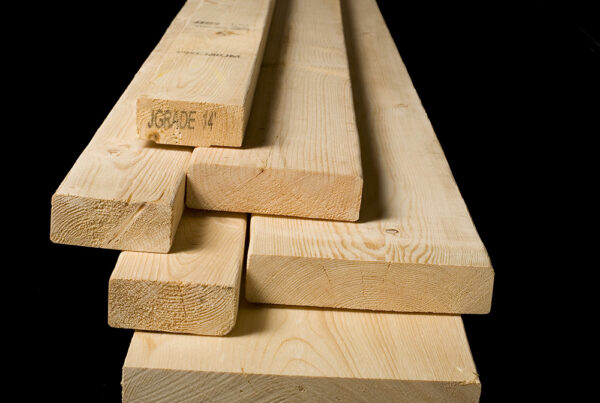
The grading rules that builders and dealers rely on today didn’t emerge in a vacuum. They were shaped by a period when lumber shortages, national security, and rapid construction made consistency a matter of necessity, not convenience. Every time a grade stamp is checked on a piece of lumber today, it reflects a system that was pressure tested during one of the most demanding periods in American industrial history.