

Modern sawmills run on lasers, scanners, and sensors that can measure a board in a fraction of a second. Yet most mills still keep human graders on the line. That’s not a holdover from an older era. It’s because machines and people are good at catching different things.
Machine Grading Measures What Can Be Measured
Machine stress rated systems test each board for stiffness and strength as it moves down the line, using sensors that flex or scan the wood in real time. That gives a precise, consistent number for how the board performs structurally, something no human eye can measure directly.
Machines Struggle With Judgment Calls
A scanner can spot a knot, but it can’t always judge whether that knot is in a spot that matters for how the board will be used. Human graders bring years of trained judgment to those in-between calls, weighing factors a machine’s rules can’t fully capture.
People Catch Defects Machines Are Built to Miss
Certain defects, like a subtle grain issue, a stain pattern, or an unusual split, can slip past a scanner tuned to look for specific measurable flaws. A trained human eye, especially one with years on the line, often catches these outliers before they leave the mill.
The Combination Builds a More Reliable Grade
Machines bring speed and consistency at a scale no person could match. Humans bring flexibility and pattern recognition machines don’t have yet. Running both together means fewer boards slip through with problems that either system alone might miss.
Why This Still Matters for Lumber Quality Today
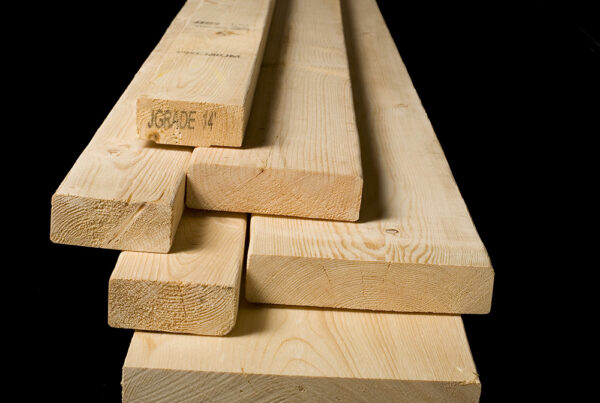
Even with more automation than ever, the final grade stamped on a board is often the result of both a machine’s data and a person’s trained eye working together. That combination is part of why lumber grading has stayed reliable even as mills have modernized around it.