
Rail service is the movement of lumber using freight trains and specialized railcars to transport large volumes of wood products between mills, distribution hubs, and regional markets. It is designed for long distance, high capacity shipping and remains one of the most important logistics systems in the lumber supply chain.
How Rail Shipping Works
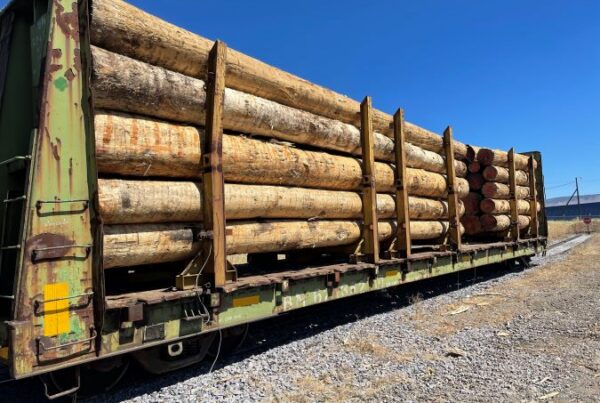
Lumber is bundled at the mill or yard and loaded onto railcars designed for heavy freight. Freight trains then move these cars along established national rail networks between production regions and consumption markets. At the destination, lumber is unloaded at rail terminals or transload facilities, where it is transferred to trucks for final delivery to customers, yards, or job sites.
Railcars Used in Lumber Transport
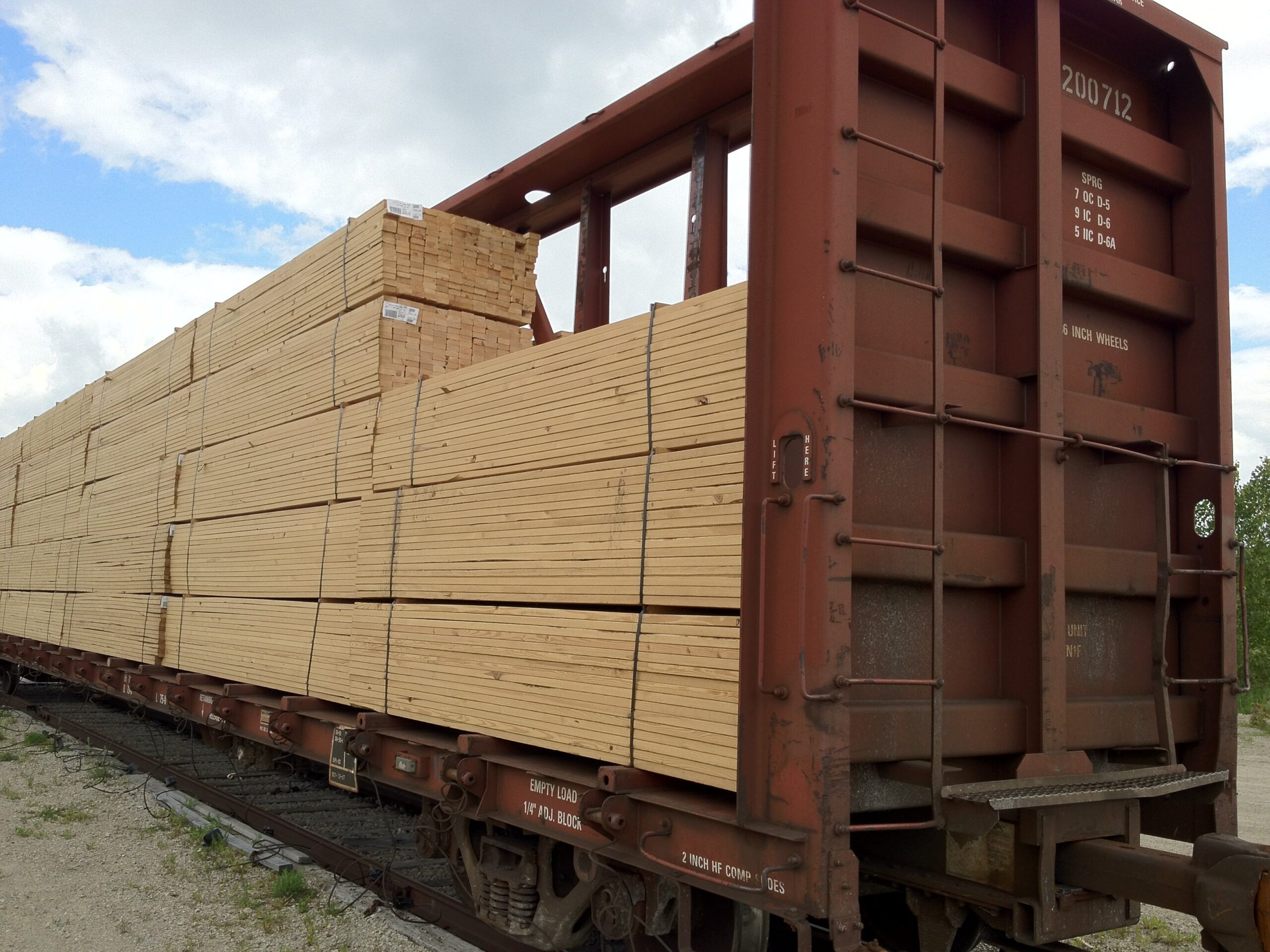
Lumber is typically shipped on flatcars or center beam railcars. Flatcars are used for general bundled material, while center beam cars are specifically designed for stacked lumber loads. The center structure helps distribute weight evenly, allowing large, heavy shipments to move safely and efficiently over long distances.
Why Rail Is Used
Rail is used because it can move very large volumes in a single shipment, often equal to multiple truckloads. This makes it especially effective for mills producing continuous output and distributors managing high inventory flow. It provides a cost efficient way to move lumber long distances while maintaining steady supply chain movement.
Role of Transloading
Rail rarely delivers lumber directly to the final customer. Instead, it relies on transload facilities where material is transferred from railcars to trucks. This creates a hybrid system where rail handles long distance freight and trucking completes local and final mile delivery.
Where Rail Fits in the Supply Chain
Rail connects major lumber producing regions with large demand markets across North America. It handles the long haul portion of transportation, reducing reliance on trucks for extended routes. This helps balance the overall logistics network and supports consistent movement of high volume freight.
Key Advantages of Rail Service
Rail provides three major benefits: high shipping capacity, cost efficiency over long distances, and reduced pressure on trucking networks. It allows mills to move production in bulk and helps distributors maintain steady inventory flow across multiple regions.
Limitations of Rail
Rail operates on fixed routes and schedules and requires access to rail infrastructure. It does not provide direct point to point delivery, which is why it must be combined with trucking to complete the supply chain. Its efficiency is highest when used for long distance bulk movement rather than short regional deliveries.
Final Thoughts
Rail service is a foundational part of the lumber industry because it solves the challenge of moving large volumes efficiently over long distances. When combined with trucking through transloading, it creates a balanced system that supports reliable, large scale distribution from mills to end markets.