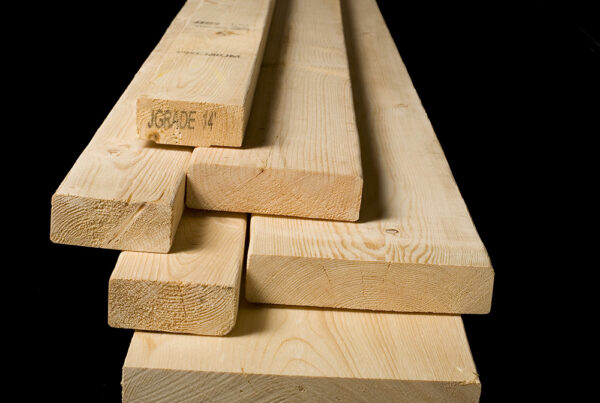


Board feet is a way to measure the volume of lumber in a standardized form so buyers and sellers can speak the same language. Instead of thinking in pounds or pieces, you are measuring how much usable wood you are actually getting. One board foot equals a piece of lumber that is 1 inch thick, 12 inches wide, and 12 inches long. Everything else is scaled off that baseline.
The Standard Formula
The most common way to calculate board feet is to use this formula:
Board Feet = (Thickness in inches × Width in inches × Length in feet) ÷ 12
This works because you are converting everything into a consistent volume measurement. Thickness and width are measured in inches, while length is kept in feet, and the division by 12 normalizes the result back into board feet.
If all dimensions are in inches, another version of the formula is:
Board Feet = (Thickness × Width × Length) ÷ 144
Both formulas give the same result, so it is mostly about which measurement set is easier for you to work with.
A Simple Example
Say you have a board that is 2 inches thick, 6 inches wide, and 10 feet long.
2 × 6 × 10 = 120
120 ÷ 12 = 10 board feet
So that single piece of lumber contains 10 board feet of material.
Why This Matters in Real Lumber Buying
In the lumber industry, pricing is almost always tied to board feet because it lets everyone quickly translate mixed dimensions into a single number. Whether you are buying random widths, different thicknesses, or mixed lengths, board feet keeps everything comparable. It is especially useful when dealing with truckloads or unit sales where the mix of material matters more than individual pieces.
Keeping It Practical
Most buyers do not calculate every board manually. Mills, wholesalers, and distributors usually provide board footage already tallied on invoices or load sheets. But understanding the calculation is still important because it helps you verify pricing, compare suppliers, and quickly estimate value on the fly when looking at a load.