

Plywood looks simple on the outside, but its real transformation happens inside the hot press where separate layers of veneer are turned into a single engineered panel. This is the stage where heat, pressure, and time permanently lock the structure together and determine how the sheet will perform in the real world.
Veneer Layers Are Already Engineered Before Pressing
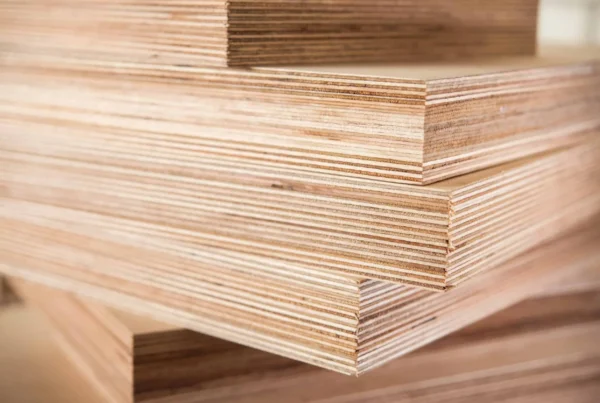
Before the press cycle even begins, plywood is built as a stack of thin veneer sheets with alternating grain direction. Adhesive is spread between each layer, but nothing is fully bonded yet. At this point the panel still behaves like a flexible stack, and the final strength and stability are not created until heat and pressure are applied.
Heat Activates the Glue and Starts the Bond
Once the panel enters the press, heat activates the resin between layers. This begins the chemical curing process that turns the adhesive from a soft or liquid state into a hardened bond. Even small differences in heat distribution can affect how evenly this bond forms across the sheet.
Pressure Compresses Everything Into One Solid Panel
Mechanical pressure forces all veneer layers into tight contact, eliminating gaps and irregularities between sheets. This compression is what creates the uniform thickness and structural integrity of plywood. Without consistent pressure, weak areas would form where layers do not fully connect.
Moisture Moves Out During the Press Cycle
As heat rises, moisture inside the veneer begins to migrate outward. This movement happens quickly and unevenly, depending on density and grain structure. The press cycle has to balance this moisture release carefully, since uneven drying can create internal stress or subtle distortion in the finished panel.
Grain Direction Locks in Strength
The alternating grain orientation of each veneer layer becomes fixed during pressing as the adhesive cures under pressure. This is what gives plywood its cross directional strength and stability compared to solid lumber, where strength depends heavily on a single grain direction.
Small Variations Still Create Real Differences
Even though the process is controlled, no two press cycles are perfectly identical. Slight differences in veneer quality, moisture levels, or pressure distribution can influence stiffness, flatness, and long term performance. These variations are why grading still matters even in engineered wood products.
Final Thoughts
Inside a plywood press, individual layers of wood are permanently transformed into a single structural material. Heat activates the adhesive, pressure bonds the layers, and moisture movement stabilizes the sheet. Once it leaves the press, plywood is no longer separate pieces of wood but a unified engineered product designed for strength and consistency.