
Lumber terminology didn’t come from a single system. It built up over time as the industry moved from local woodworking to shipbuilding, then industrial mills, and eventually engineered wood and modern supply chains. Each stage added new language, but older terms never fully disappeared. They just stacked on top of each other. That layering is why lumber terminology feels complex today. You’re not learning one system you’re learning several eras at once.
Early Woodworking Language
In early woodworking, there was no formal structure to naming lumber. Wood was sourced locally and used nearby, so language stayed simple and practical. Terms like board, beam, and plank were based on function, not exact size or grade. People didn’t need standard definitions because everyone was working from the same local understanding of material and use.
Shipbuilding and Early Standardization
Shipbuilding was the first major force that pushed lumber language toward consistency. Ships needed predictable strength and performance, so descriptions had to become more specific. Wood started being talked about in terms of strength, grain behavior, and structural reliability. This became the early foundation of grading and pushed timber trade toward more consistent terminology across regions.
Industrialization and Mill Language
Once sawmills took over production, lumber stopped being shaped purely by craftsmen and started being mass produced. That shift required standard sizing and repeatable terms. This is where nominal dimensions came from. A two by four became a standardized reference tied to mill output, not a literal measurement. Terms like rough sawn and planed also became common as processing levels became part of the description. Early grading systems also started forming, separating structural lumber from lower quality material based on strength and defects.
North American Expansion and Formal Grading
As construction demand exploded across North America, lumber needed to move faster and more efficiently through supply chains. That led to more formal grading systems and standardized industry language. Hardwood grading focused on usable clear yield, while softwood grading became more structural and code driven. Species abbreviations became standard shorthand to simplify ordering and communication across regions. At this point, lumber language became more technical than craft based.
Engineered Wood and New Terminology
The rise of plywood and engineered wood introduced an entirely new layer of language. Now the industry wasn’t just describing natural wood it was describing manufactured performance. Terms like veneer, core, adhesive, and panel systems became standard. Grades like CDX were created to quickly communicate surface quality and structural suitability in one code. This shifted lumber terminology from describing material to describing engineered function.
Modern Lumber Language
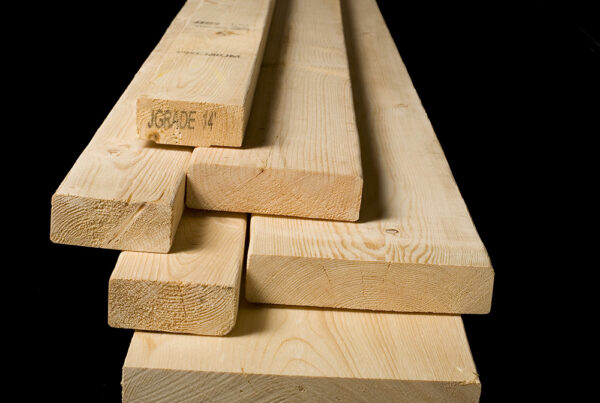
Today, lumber terminology is built around speed, logistics, and building codes. Most of the language exists to move information quickly between mills, yards, and job sites. Grade stamps, moisture content, species codes, and certification marks all compress a lot of information into a small label. Instead of describing wood in detail, the system now communicates performance, compliance, and approved use.
Why It Still Feels Complicated
Lumber terminology feels complicated because nothing got replaced. Everything stayed. Craft language, industrial sizing, grading systems, engineered wood codes, and logistics terms all still exist together. So a single piece of lumber can carry information from multiple eras at once. That’s the real reason the language feels dense it never restarted clean.
Final Thought
Lumber terminology is basically a history of how the industry evolved. It starts with simple functional descriptions, moves into shipbuilding standards, then industrial mill systems, then engineered products, and finally modern code based communication. Once you see it as layers instead of confusion, the whole system starts to make sense.