

Not all lumber looks or feels the same. Some boards come straight from the sawmill with a rough, textured surface, while others are smooth and ready to use. The difference comes down to one extra step in the manufacturing process. Understanding how each type is made can help you choose the right lumber for your project.
What Is Rough Sawn Lumber?
Rough sawn lumber is cut from a log and shipped without being planed smooth. It still has the texture left by the saw, along with slightly larger dimensions than finished lumber. Its natural appearance makes it a popular choice for timber framing, barns, fencing, rustic furniture, and other projects where a more traditional look is desired.
What Is Surfaced Lumber?
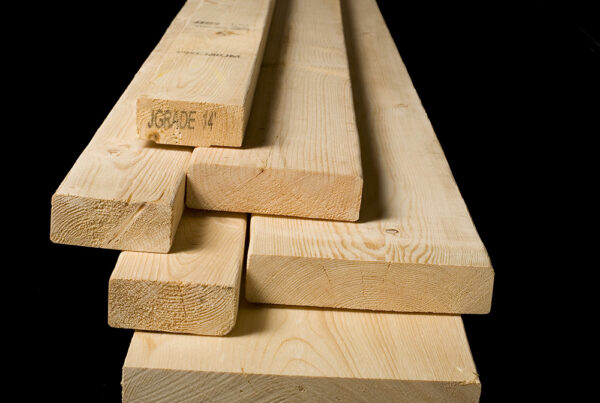
Surfaced lumber goes through a planer after it has been dried. This removes a small amount of material from each face and edge, creating smooth boards with consistent dimensions. It’s the type of lumber most commonly used for residential framing, interior construction, and many woodworking projects because it’s easier to handle and fits together more accurately.
Why Size Changes
One of the biggest differences between the two is size. Rough sawn lumber starts out larger, but once it’s dried and planed, its finished dimensions become smaller. That’s why a board sold as a 2×4 actually measures about 1½ inches by 3½ inches after surfacing.
Is One Better Than the Other?
Neither type is better, they’re simply designed for different uses. Both can be strong and reliable when properly graded and used correctly. The biggest differences are their appearance, finish, and intended application.
Final Thoughts
Rough sawn and surfaced lumber both begin the same way, but one extra manufacturing step creates two very different products. Whether you’re building a home or crafting a custom project, understanding the difference will help you choose the lumber that’s best suited for the job.