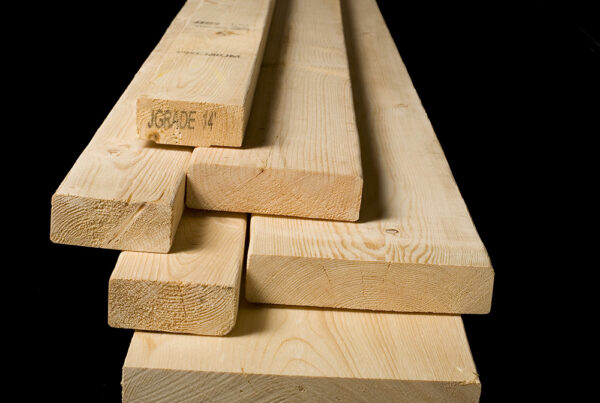


Check the end of a stud at almost any lumberyard, and there’s a good chance it’s stamped “SPF.” It sounds like one type of tree. It’s actually three. Here’s why the industry lumps them together, and why that’s a good thing.
SPF Stands for Spruce-Pine-Fir
The letters mean exactly what they look like: Spruce, Pine, and Fir. These are several related species that grow across Canada and the northern United States. Instead of tracking each one separately, the industry groups them under one name.
The Species Get Grouped Because They Perform the Same
Spruce, certain pines, and true firs are close enough in strength, stiffness, and weight to be treated as equals. A stud cut from white spruce holds up a wall the same way a stud cut from balsam fir does. So building codes grade them together instead of apart.
Grouping Them Keeps the Supply Chain Simple
Imagine if every species needed its own grade stamp, its own span table, and its own engineering numbers. Mills, yards, and builders would be juggling a much messier system. Grouping them as SPF means one set of standards covers wood from many forests and many mills, with no drop in reliability.
It Also Gives Mills More Flexibility
Because SPF covers three species, a mill isn’t stuck if one type runs short. If one species is more available in a given season, it can fill the same order without changing anything about how the lumber gets used.
The Trade-Off Is Some Natural Variation
Buy a bundle of SPF studs and you might notice slight differences in color or weight from board to board. That’s normal. You’re getting a mix of species, not one uniform tree, and the grading standards already account for it.
Why This Matters When You’re Buying Lumber
Next time you spot “SPF” on a grade stamp, remember: you’re not buying one species. You’re buying a category built for consistent performance, not a consistent tree. That’s a big part of why SPF lumber stays affordable and easy to find across so much of North America.