
Lumber prices are influenced by many factors, including housing demand, mill production, transportation costs, and inventory levels. However, one of the most powerful and often misunderstood forces in the market is trade policy. Tariffs, duties, and trade agreements can significantly affect lumber pricing, product availability, and sourcing decisions throughout North America.
The U.S. and Canada Lumber Relationship
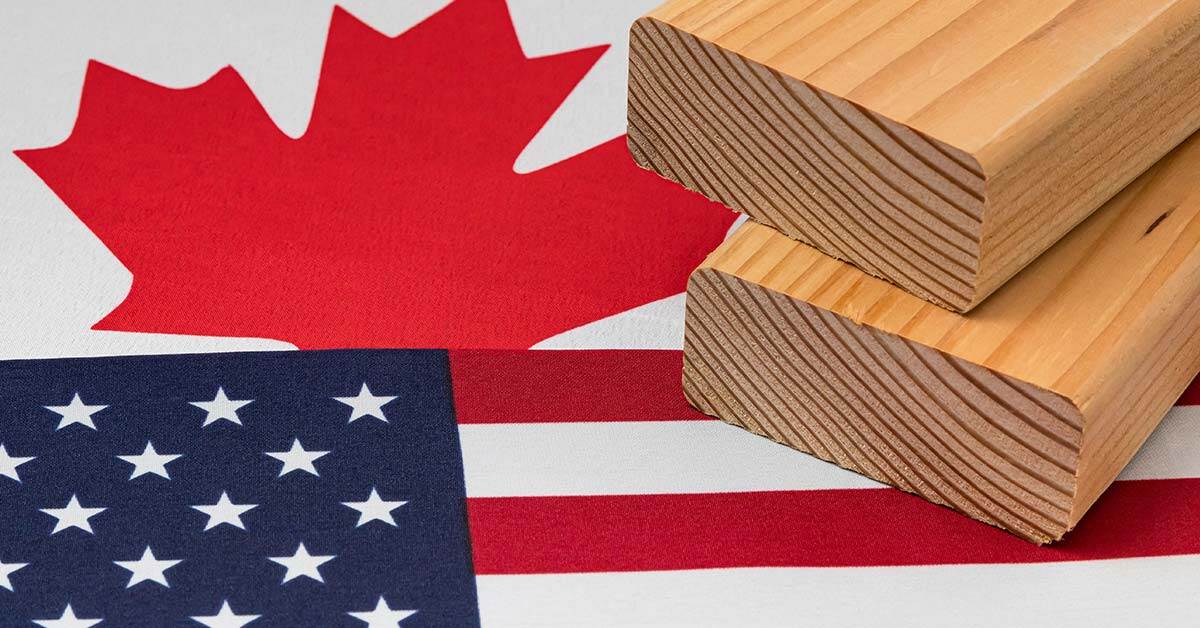
The United States and Canada operate within one of the most interconnected lumber markets in the world. Canadian mills supply a substantial portion of the softwood lumber used in U.S. residential construction, helping meet demand that domestic production cannot always satisfy on its own. Because the two markets are so closely linked, changes in trade policy can have immediate consequences. Even relatively small adjustments to tariffs or duties can influence pricing, shift purchasing patterns, and alter supply availability across North America.
Understanding Lumber Duties
Duties are taxes imposed on imported goods when they cross a border. In the lumber industry, duties are often implemented in response to allegations that imported products are being sold below fair market value or benefit from government subsidies. When duties are placed on Canadian lumber entering the United States, the cost of importing that material increases. Importers, distributors, and wholesalers typically pass a portion of those additional costs through the supply chain, ultimately affecting market prices. As a result, buyers may begin evaluating alternative suppliers, substitute products, or different species to maintain competitiveness.
How Trade Policy Changes Supply Flows
Trade policy affects far more than price. It also influences where lumber is produced, sold, and shipped. When duties increase, Canadian producers may reduce shipments to the United States and redirect volume to other export markets. Some mills may adjust production schedules, while others may focus on products less affected by trade restrictions. At the same time, U.S. buyers often increase purchases from domestic mills or seek alternative imported products to fill supply gaps. These shifts can create regional imbalances in supply, leading to temporary shortages in some markets and excess inventory in others. The result is often increased price volatility as buyers and sellers adjust to changing market conditions.
Long-Term Industry Impacts
Trade disputes can also shape long-term investment decisions throughout the lumber industry. When companies face ongoing uncertainty surrounding tariffs and duties, they often look for ways to reduce their exposure. One common strategy has been for Canadian producers to invest in or acquire manufacturing facilities within the United States. By producing lumber domestically, these companies can continue serving U.S. customers while limiting the impact of cross-border trade barriers. Over time, these investments can shift production capacity, alter competitive dynamics, and reshape the structure of the North American lumber market.
Why Trade Policy Matters
For lumber buyers, understanding trade policy is essential because it influences both cost and availability. A change in tariffs can affect not only the price of imported lumber but also pricing across the broader market as supply chains adjust. While housing demand, mill output, and transportation costs remain important market drivers, trade policy often determines how efficiently lumber moves between Canada and the United States. Its impact reaches every level of the supply chain, from producers and distributors to dealers, builders, and end users.
Final Thoughts
Trade policy is more than a political issue. It is a fundamental market force that directly affects lumber pricing, sourcing strategies, and supply chain decisions. As trade agreements evolve and duties change, industry participants must continuously adapt to shifting market conditions. Understanding these dynamics provides valuable insight into why lumber prices move and how supply patterns develop across North America.