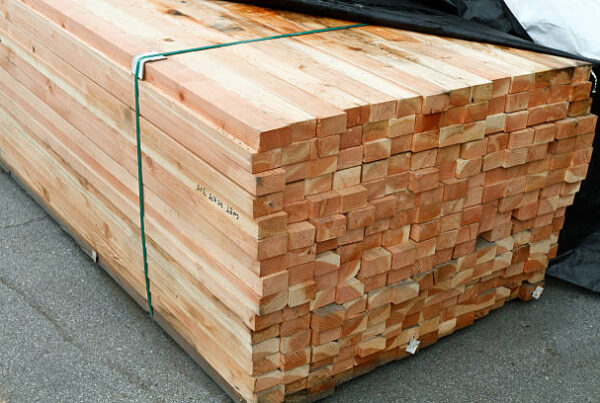


Aged lumber refers to wood that has been cut, milled, and then held in storage for a period of time before it is used or sold. This storage can occur at different points in the supply chain, including sawmills, wholesale distribution yards, or even job site staging areas where material is held until installation. During this time, the lumber is no longer in a controlled production environment and is instead exposed to whatever storage conditions exist on site, which can vary widely depending on location, season, and handling practices. The term itself does not refer to a different grade or product type, but simply describes the time that has passed since production.
Does Aging Change the Quality
Aged lumber is not inherently lower quality, and the effect of time alone is often misunderstood. Wood is a natural material that continuously responds to its environment, meaning that temperature and humidity play a much larger role than age itself. When lumber is stored in a controlled setting that is dry, covered, and allows for some airflow, it can remain very stable and in some cases gradually adjust to ambient conditions in a way that reduces internal stress. This is why properly stored inventory can still perform well even after extended periods of time. The concern only arises when storage conditions are inconsistent or uncontrolled, since that is when the material begins to react in ways that affect its physical shape and surface condition.
Why Fresh Lumber Is Often Preferred
Fresh lumber is often preferred in construction because it arrives closer to a uniform baseline condition directly from the mill. This means the moisture content is more consistent at the time of delivery, and the material has not yet been influenced by extended storage environments. For builders and framers, this predictability helps reduce variability during installation since the wood has not already begun reacting to external conditions. That said, all lumber continues to change after installation as it naturally dries and acclimates to the environment of the structure, so even fresh material is not completely static once it is in use.
When Storage Conditions Are Effective
When lumber is stored correctly, aging has minimal impact on its usability and performance. Proper storage typically means keeping the material covered to protect it from direct precipitation and sunlight, elevating it off the ground to avoid moisture transfer, and allowing enough airflow to prevent trapped humidity from building up between layers. Under these conditions, lumber can remain stable for long periods without significant changes in shape or structural characteristics. In some environments where humidity levels are relatively consistent, stored lumber may even behave more predictably during installation because it has already reached a balanced moisture state before use.
Problems arise when lumber is left in environments where moisture and temperature fluctuate frequently without protection. Cycles of wetting and drying cause the fibers in the wood to expand and contract repeatedly, which can gradually alter its shape and alignment. Poor stacking practices can also contribute to long term deformation, especially if weight is unevenly distributed or if supports are not placed correctly along the length of the boards. Over time, these conditions can affect both the appearance and usability of the lumber, even if the original material was high quality when it left the mill.
Market Perspective on Inventory Age
From a supply chain and pricing standpoint, the age of lumber in storage does not independently determine its value. Pricing is primarily influenced by market conditions such as supply availability, demand levels, transportation costs, and grade specifications. However, when inventory remains in storage for extended periods, distributors may adjust pricing strategies to align with current market demand or to encourage movement of slower stock. This is more of a logistical decision than a reflection of the material itself, since the lumber may still be structurally sound and fully usable even if it has been held for longer than typical turnover cycles.
Key Takeaway
Aged lumber should be understood in terms of exposure and storage history rather than simply the passage of time. When it is properly protected and stored in stable conditions, it remains consistent and suitable for use in construction without meaningful loss of performance. When it is exposed to fluctuating moisture, sunlight, or poor handling practices, its physical characteristics can change in ways that affect how it behaves on site. The critical factor is not how long the lumber has existed, but the environment it has been held in during that time.