

Most people assume sawmills simply cut logs into lumber and sell whatever comes out. In reality, mills are constantly making strategic decisions about what to produce, how much to produce, and what to avoid producing altogether. These decisions are driven by margins, demand signals, operating efficiency, and how easily material can be sold into different regions. A mill is not just a production facility, it is a balancing system between raw log costs, equipment constraints, labor availability, and shifting market demand, and what gets produced is less about what is possible and more about what is profitable and sellable right now.
It Starts With Log Cost and Availability
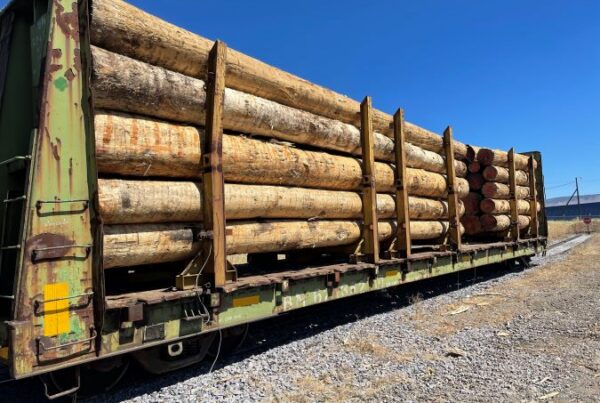
The first constraint is raw material supply. Mills are limited by what types of logs are available locally and at what cost, and that alone heavily influences what they choose to produce. If certain logs become more expensive or harder to source, mills shift toward products that extract more value per log rather than simply maximizing total output. Production changes are therefore driven less by consistency and more by what makes economic sense based on incoming raw material conditions at that time.
Mills Follow Margin, Not Just Demand
Demand plays a role, but profitability is the main driver behind production decisions. Mills constantly evaluate which products generate the best return after accounting for production costs, yield efficiency, and selling price. A product can be in high demand but still be deprioritized if margins are weak, while a less obvious product may be favored because it produces better returns per unit of capacity. This is why production decisions often seem disconnected from what buyers think should be available.
Equipment Efficiency Shapes Product Mix
Mills are physical systems, and equipment efficiency strongly influences what gets produced. Certain dimensions or cuts run more smoothly through the mill, create less waste, or align better with cutting patterns, which increases throughput and reduces cost per unit. Over time, mills naturally lean toward products that keep machinery running efficiently and consistently, because even small improvements in production speed or waste reduction have a major impact at scale.
Market Access and Regional Demand Matter
Location and freight access also shape production decisions because mills prioritize products that can move efficiently into nearby markets. If certain items consistently sell faster or travel more economically into accessible regions, they are more likely to be produced. This makes production partly a function of geography, where mills respond not just to overall demand but to where material can actually flow without excessive transportation friction.
Allocation and Long-Term Customer Relationships
A large portion of mill output is tied to established customer relationships rather than purely spot market demand. Mills often allocate production to long-term buyers such as distributors and wholesalers who expect consistent supply over time. This reduces risk for the mill and creates stability in demand, but it also means production is partially shaped by contractual or relational commitments rather than immediate market signals.
What Mills Choose Not to Produce Is Just as Important
Production decisions are not only about what gets increased but also what gets reduced or eliminated. When conditions change, mills may cut back on lower-margin products, less efficient cuts, or items that do not move smoothly through distribution channels. These reductions are often invisible to end buyers but have real effects on market availability, as removing supply in one area can shift pressure and pricing into other product categories.
The Bottom Line
Mills operate as continuous optimization systems rather than simple production facilities. Every decision is shaped by log costs, margins, equipment efficiency, freight access, and customer commitments, all interacting at the same time. What reaches the market is not just what is demanded, but what can be produced most efficiently and profitably under real-world constraints at that moment.