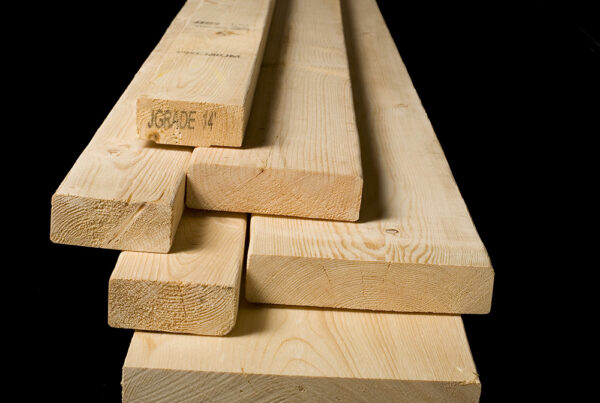


Many buyers assume that if two boards carry the same grade stamp, they should look nearly identical. In reality, lumber grading is designed to ensure a board meets certain performance standards, not guarantee a uniform appearance. As a result, two pieces of lumber with the same species, dimensions, and grade can look surprisingly different while still meeting the exact same grading requirements.
Lumber Grades Define Acceptable Ranges
Lumber grades are based on a set of industry rules that establish allowable limits for characteristics such as knots, wane, grain deviation, splits, and other natural features. Rather than requiring every board to look the same, grading standards create a range of acceptable characteristics. A board that barely meets the requirements and another that far exceeds them can still receive the same grade stamp, which is why visual differences are common within any lumber grade.
Knots Can Create Major Visual Differences
Knots are often the first thing buyers notice when comparing boards. Some pieces may contain several small knots while others may have fewer but larger ones, yet both can remain within the limits of the same grade. Because grading rules establish maximum allowable defects rather than a specific appearance, knot patterns can vary significantly from board to board without affecting the grade classification.
Every Tree Grows Differently
Wood is a natural product, and no two trees develop under exactly the same conditions. Factors such as climate, soil quality, age, and growth rate influence grain patterns, density, and overall appearance. Even boards cut from the same stand of timber can display noticeable differences, making variation a normal part of working with wood rather than a sign of inconsistent quality.
Color Variation Is Natural
Differences in color are common even within the same species. Boards may contain varying amounts of heartwood and sapwood, and natural growing conditions can influence coloration throughout the tree. Drying methods, storage conditions, and exposure to light can also affect appearance over time. Because lumber grades focus primarily on structural characteristics, color consistency is generally not a factor in the grading process.
Grade Is About Performance, Not Looks
One of the most important things to understand about lumber grading is that it is intended to predict performance rather than appearance. Structural grades help ensure lumber can perform its intended function safely and reliably, but they do not guarantee a particular look. Buyers seeking a more uniform appearance often need to specify appearance grades, special mill selections, or additional sorting requirements beyond standard construction grades.
Final Thoughts
When two boards with the same grade look different, it does not mean one is better than the other. Lumber grading systems are designed to account for the natural variation found in wood while ensuring each piece meets established standards for its intended use. Understanding that grades measure allowable characteristics rather than visual uniformity helps buyers make better decisions and set realistic expectations when purchasing lumber.