
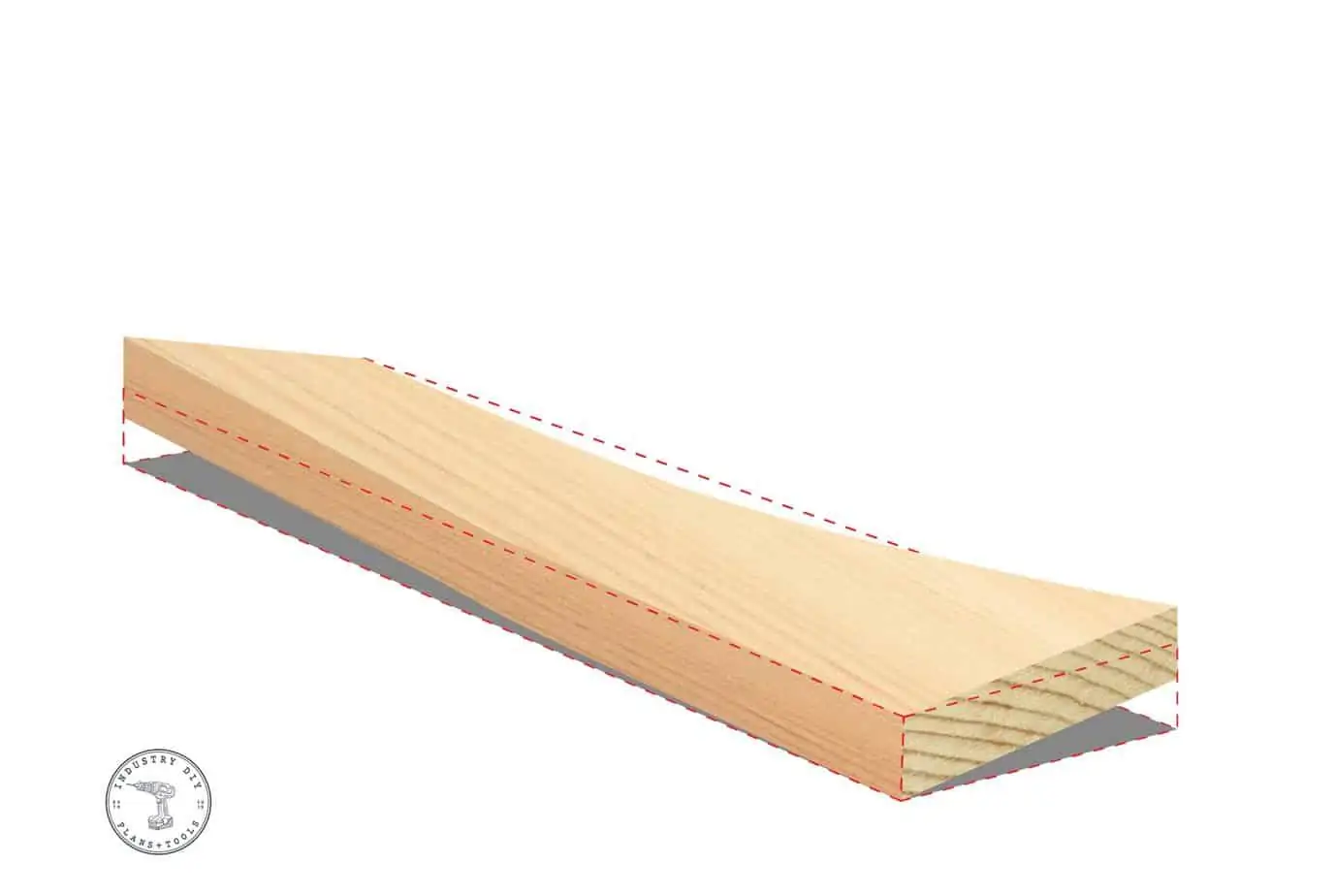
Two boards cut from the same tree can behave very differently after they leave the sawmill. One may stay perfectly straight for years, while another develops twists, bows, cups, or crooks. The difference comes down to how the wood was grown, sawn, dried, and stored.
Grain Orientation Makes a Big Difference
The direction of the wood grain plays one of the biggest roles in stability. Quarter-sawn lumber tends to expand and contract more evenly than plain-sawn lumber because its growth rings are more vertical. Straight grain also helps reduce uneven movement as moisture changes over time.
Juvenile Wood Is Less Stable
The wood formed during the early years of a tree’s life is known as juvenile wood. It contains fibers that naturally shrink and move more than mature wood. Boards with a high percentage of juvenile wood are more likely to twist or warp during drying and after installation.
Drying Stresses Can Cause Movement
As lumber dries, moisture leaves the board from the outside first while the center remains wetter. If drying is too rapid or uneven, internal stresses develop. Even after the board reaches its final moisture content, these stresses can cause movement if they are not properly relieved during kiln drying.
Moisture Changes Never Stop
Wood constantly exchanges moisture with the surrounding air. When humidity rises, wood absorbs moisture and expands. When humidity drops, it releases moisture and shrinks. Uneven moisture changes across a board often lead to twisting, cupping, or bowing.
Proper Storage Prevents Problems
Even high-quality lumber can warp if stored incorrectly. Lumber should be stacked flat on level supports, protected from rain and direct sunlight, and allowed to acclimate before installation. Good airflow helps maintain consistent moisture throughout the stack and reduces unwanted movement.
Quality Manufacturing Helps
Modern sawmills carefully control sawing patterns, kiln schedules, and grading to produce straighter lumber. Selecting boards with straight grain and proper moisture content greatly improves long-term performance in construction and woodworking projects.
Final Thoughts
Wood is a natural material that continues to respond to its environment long after it is cut. Understanding grain orientation, moisture, drying, and storage helps explain why some boards remain perfectly straight while others develop warping over time.