

A hundred years ago, every step of the building process demanded time and hard work. Trees were felled with hand saws, logs were hauled by horse-drawn wagons, and lumber was cut and assembled using basic hand tools. Construction moved at the pace of the people doing the work, and skilled craftsmanship was the most valuable tool on every jobsite.
Now: Building with Technology
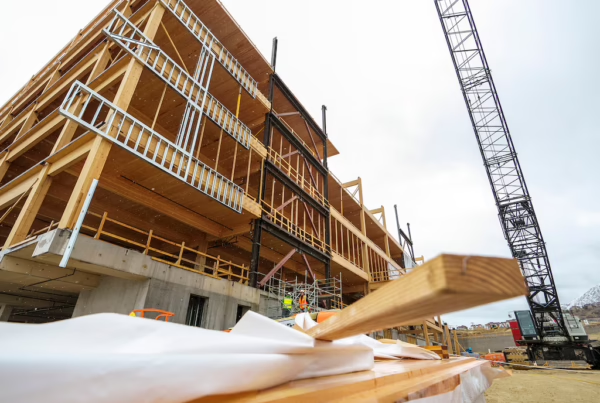
Today’s construction sites look completely different. CNC mills produce precision-cut lumber, automated sawmills maximize every log, and digital software allows entire buildings to be designed before construction begins. Cranes, forklifts, and advanced equipment have replaced much of the heavy manual labor, helping builders complete projects faster, safer, and with greater accuracy than ever before.
Then: Simple Materials, Simple Structures
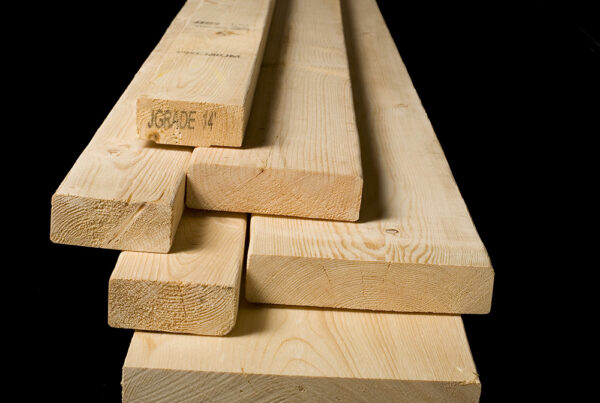
In the early 1900s, most projects relied on solid sawn lumber and traditional framing techniques. Homes, barns, and small commercial buildings made up the majority of construction, and builders worked with the materials available at the time. Even with fewer options, those structures were built to last, and many are still standing today.
Now: Smarter Materials, Bigger Possibilities
Modern builders have access to engineered lumber, finger-jointed products, LVL, glulam, I-joists, and mass timber systems that simply didn’t exist a generation ago. These products allow for longer spans, greater strength, improved consistency, and larger buildings while reducing waste and increasing efficiency. Technology hasn’t changed the importance of wood—it has expanded what wood can do.
Then: Local Supply Chains
Most lumber was produced close to where it was needed. Mills supplied nearby communities, transportation was slower, and builders often worked with whatever species and sizes were locally available. Every delivery took longer, and planning ahead was essential.
Now: A Connected Industry
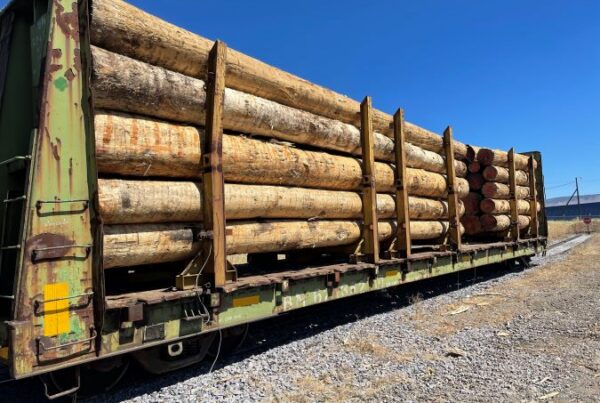
Today’s lumber industry operates through an integrated supply chain. Mills, wholesalers, distributors, and dealers work together to move products across North America quickly and efficiently. Builders have access to a wider range of species, grades, and engineered products than ever before, allowing projects to stay on schedule and meet increasingly demanding performance standards.
One Thing Has Never Changed
The biggest difference between then and now isn’t the material—it’s the technology surrounding it. The tools are faster. The manufacturing is smarter. The buildings are bigger. But through every innovation, lumber has remained the foundation of construction. For generations it has built homes, businesses, schools, and communities, and it continues to do exactly that today. A century has changed the way we build. It hasn’t changed what we build with.