

Wood is one of the oldest building materials in the world, yet it remains one of the most remarkable. A major reason for its strength is the way it responds to different types of forces. Every beam, joist, truss, and stud experiences compression and tension, and wood is uniquely suited to handle both. Understanding these forces helps explain why properly designed wood structures can last for generations.
What Is Compression?
Compression is a force that pushes material together. In a building, wall studs carry the weight of the roof and upper floors by transferring these downward forces to the foundation. Wood performs exceptionally well under compression because its long, tightly packed fibers resist being crushed, making it an excellent choice for columns, posts, and load-bearing walls.
What Is Tension?
Tension is the opposite of compression. Instead of pushing, it pulls a material apart. Wood’s long natural fibers act much like thousands of tiny strands running the length of the board, allowing it to resist pulling forces surprisingly well. This is why wood is commonly used in roof trusses, floor systems, and engineered products where parts of the structure are constantly under tension.
Why Grain Direction Matters
Wood is strongest when forces act parallel to its grain. The fibers run from one end of the tree to the other, creating a natural reinforcement that gives lumber its impressive strength. When loads are applied across the grain instead, wood is much weaker because the fibers can separate more easily. This is one reason builders always pay close attention to grain direction during design and construction.
Compression and Tension Working Together
Most structural lumber doesn’t experience just one type of force. A floor joist supporting people and furniture bends slightly under load. As it bends, the top of the board is compressed while the bottom is stretched in tension. The ability to resist both forces at the same time allows wood members to safely carry heavy loads without failing.
How Engineers Take Advantage of This
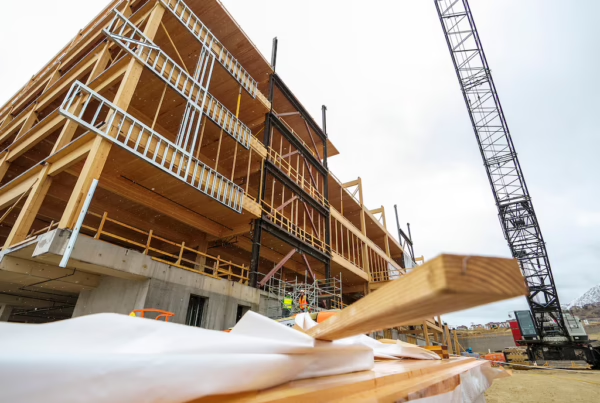
Engineers carefully calculate where compression and tension will occur before designing a structure. Roof trusses, glued laminated timber (glulam), laminated veneer lumber (LVL), and cross-laminated timber (CLT) are all designed to place wood where it performs best. By understanding how wood behaves under different forces, engineers can create buildings that are stronger, lighter, and more efficient.
Why Moisture Matters
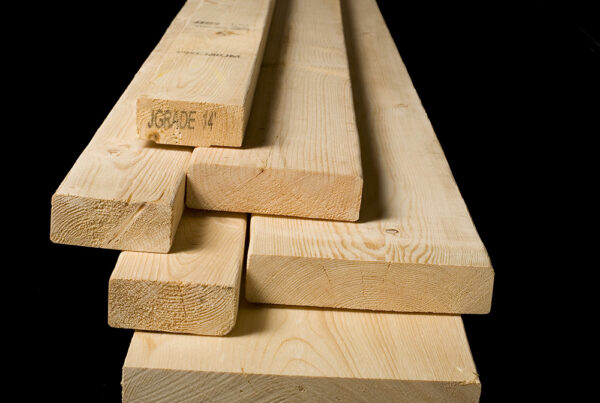
The strength of wood depends not only on the species but also on its moisture content. Properly dried lumber maintains its strength more consistently and is less likely to shrink, twist, or warp after installation. Sawmills carefully dry lumber to the appropriate moisture level so it performs as expected when placed under compression and tension in a finished structure.
Nature’s Built-In Engineering
Trees evolved to withstand powerful natural forces long before people began building with them. Every day they resist gravity pushing downward, strong winds bending their trunks, and the weight of heavy branches. Those same natural fibers that help a tree survive storms are what make lumber such a dependable structural material once it reaches the job site.