
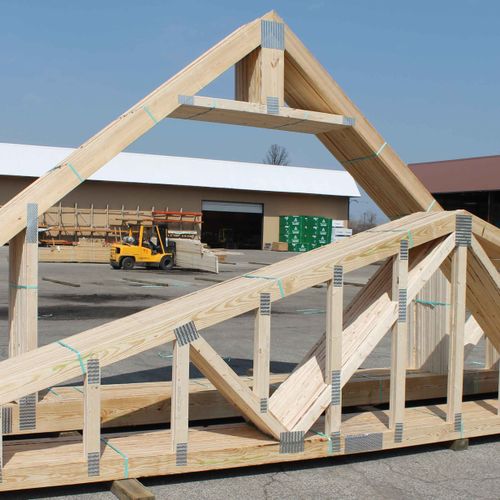
Most homeowners never see the roof trusses above their ceiling, but they play a vital role in keeping a house standing. Designed to carry the weight of the roof while resisting wind, rain, and snow, roof trusses provide incredible strength using relatively small pieces of lumber arranged in a carefully engineered design.
What Is a Roof Truss?
A roof truss is a prefabricated framework made from multiple pieces of lumber connected with steel plates. Instead of relying on a few large beams, the truss uses a network of smaller members that work together to spread loads across the entire structure.
How Trusses Carry Weight
When weight from shingles, snow, or strong winds presses down on the roof, each part of the truss shares the load. The angled top chords, bottom chord, and interior web members work together to transfer those forces safely to the exterior walls, allowing the roof to support heavy loads without sagging.
Why Builders Use Trusses
Roof trusses are manufactured in controlled environments for consistent quality and precise dimensions. They arrive at the job site ready to install, helping builders save time, reduce waste, and create stronger, more accurate roof systems than many traditional framing methods.
Built for Every Climate
Not every roof truss is the same. Engineers design each truss to match the building’s size, roof shape, and local weather conditions. Homes in snowy regions require different designs than homes in areas where wind or hurricanes are the primary concern.
The Role of Quality Lumber
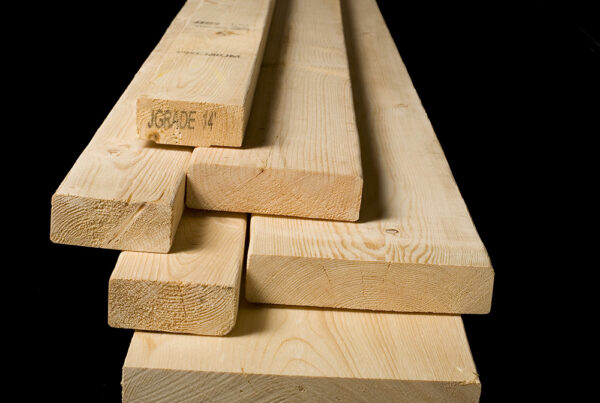
Every truss depends on high-quality lumber to perform as designed. Straight, properly graded lumber ensures each member can safely carry its share of the load while maintaining the strength and durability needed for decades of service.
Final Thoughts
Roof trusses are a perfect example of how engineering and lumber work together. By combining quality materials with smart design, they create strong, efficient roof systems that protect millions of homes every day.