
Not Every Part of a Tree Has Equal Value
Most people assume the center of a tree contains the strongest and most valuable wood. In reality, the opposite is often true. While every part of a log has a purpose, the wood closest to the center frequently has characteristics that make it less desirable for high-value lumber products. Understanding why helps explain how sawmills maximize value from every log they process.
What Is the Center of a Tree?
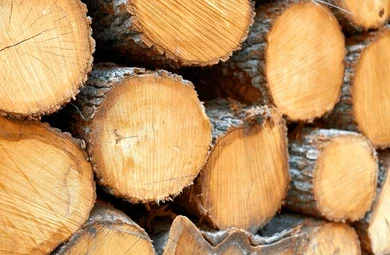
The center of a tree contains the pith, the small core around which the tree began growing. Surrounding the pith is juvenile wood, which forms during the tree’s early years. Because this wood developed while the tree was still growing rapidly, it typically has lower density, greater grain variation, and reduced dimensional stability compared to wood formed later in the tree’s life.
Why Juvenile Wood Is Less Valuable
Juvenile wood tends to shrink more during drying and is more likely to twist, bow, or warp after milling. It also generally has lower stiffness and strength than mature wood. These characteristics make it less desirable for premium structural lumber, appearance-grade products, and engineered wood applications where consistency is critical.
The Highest-Value Lumber Comes From Mature Wood
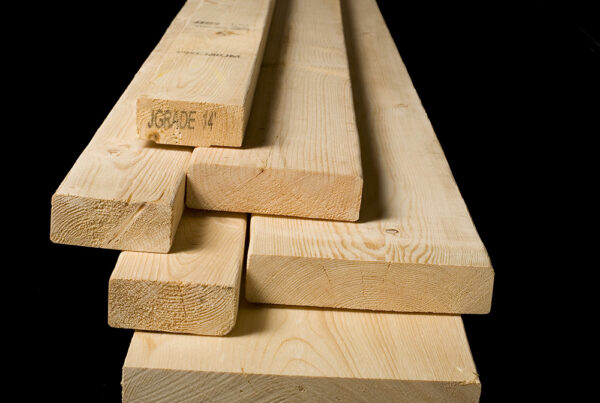
The lumber that commands the highest prices is usually cut from the mature wood located between the tree’s center and outer edge. This portion offers straighter grain, improved strength, greater stability, and fewer manufacturing issues. Depending on the species, it often produces the highest structural grades and the most visually appealing boards.
Every Part of the Tree Still Has a Purpose
Although the center of the tree may produce lower-value lumber, it rarely goes to waste. Boards cut from juvenile wood may still be used for pallets, packaging, industrial applications, or lower structural grades. Smaller pieces can also become wood chips, pulp for paper production, oriented strand board (OSB), wood pellets, or biomass fuel. Modern sawmills are designed to utilize nearly every part of the log.
How Sawmills Maximize Value
Today’s sawmills use laser scanners, X-ray technology, and optimization software to determine the best cutting pattern for every log. By identifying where the highest-quality wood is located, mills can produce premium lumber from mature wood while directing lower-value material into products where its characteristics are still valuable. This approach increases recovery while minimizing waste.
The Bottom Line
The most valuable lumber doesn’t usually come from the center of a tree—it comes from the mature wood that surrounds it. While the center plays an important role in the tree’s growth, its wood is generally less stable and less desirable for premium applications. Thanks to modern manufacturing, however, every section of the tree contributes value, allowing the forest resource to be used efficiently from the pith to the bark.