
It may seem like lumber comes straight from the tree in perfect lengths, but that’s not how it works. Before a board reaches a lumber yard, it almost always goes through a trimming process. Trimming improves quality, removes defects, creates consistent lengths, and helps ensure every piece of lumber is ready for construction. While only a small amount of wood is removed, this final step has a big impact on the quality of the finished product.
Trees Aren’t Perfect
Every tree grows differently, and no log is completely free of defects. Natural features like knots, end splits, rot, insect damage, and crooked grain are common, especially near the ends of a log. Trimming removes these weaker sections so the remaining board is stronger, safer, and better suited for building applications.
Clean, Square Ends
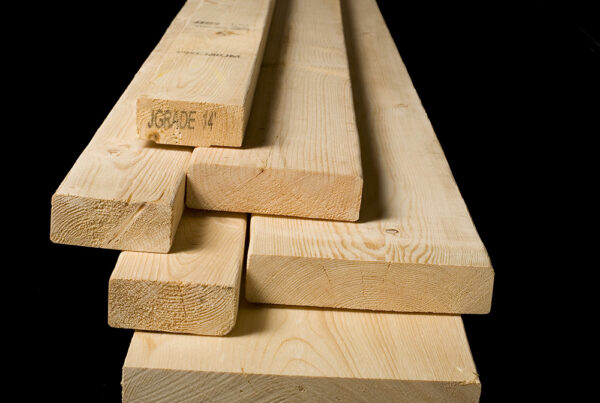
When a log is first sawn into boards, the ends are often rough, uneven, or cracked from the cutting and handling process. Trimming creates smooth, square ends that are easier to measure, stack, transport, and install. It also gives builders a more accurate piece of lumber that fits together cleanly on the job site.
Standard Lengths
Construction relies on consistency, which is why lumber is sold in standard lengths such as 8′, 10′, 12′, and 16′. Trimming allows sawmills to produce boards that meet these industry standards, making estimating, ordering, shipping, and framing much more efficient. Without trimming, every board would be a different length and much harder to use.
Meeting Lumber Grades
Before lumber leaves the mill, it is inspected to ensure it meets its assigned grade. If defects are found near either end of a board, additional trimming may be needed to remove them. This helps the lumber meet grading requirements while ensuring customers receive a reliable product that performs as expected.
Making Use of Every Piece
Although trimming removes a small portion of each board, very little wood is wasted. The trimmed pieces are often turned into wood chips for paper, particleboard, mulch, animal bedding, biomass fuel, or other wood products. Modern sawmills are designed to use nearly every part of every log, maximizing both value and sustainability.
Technology Does the Work
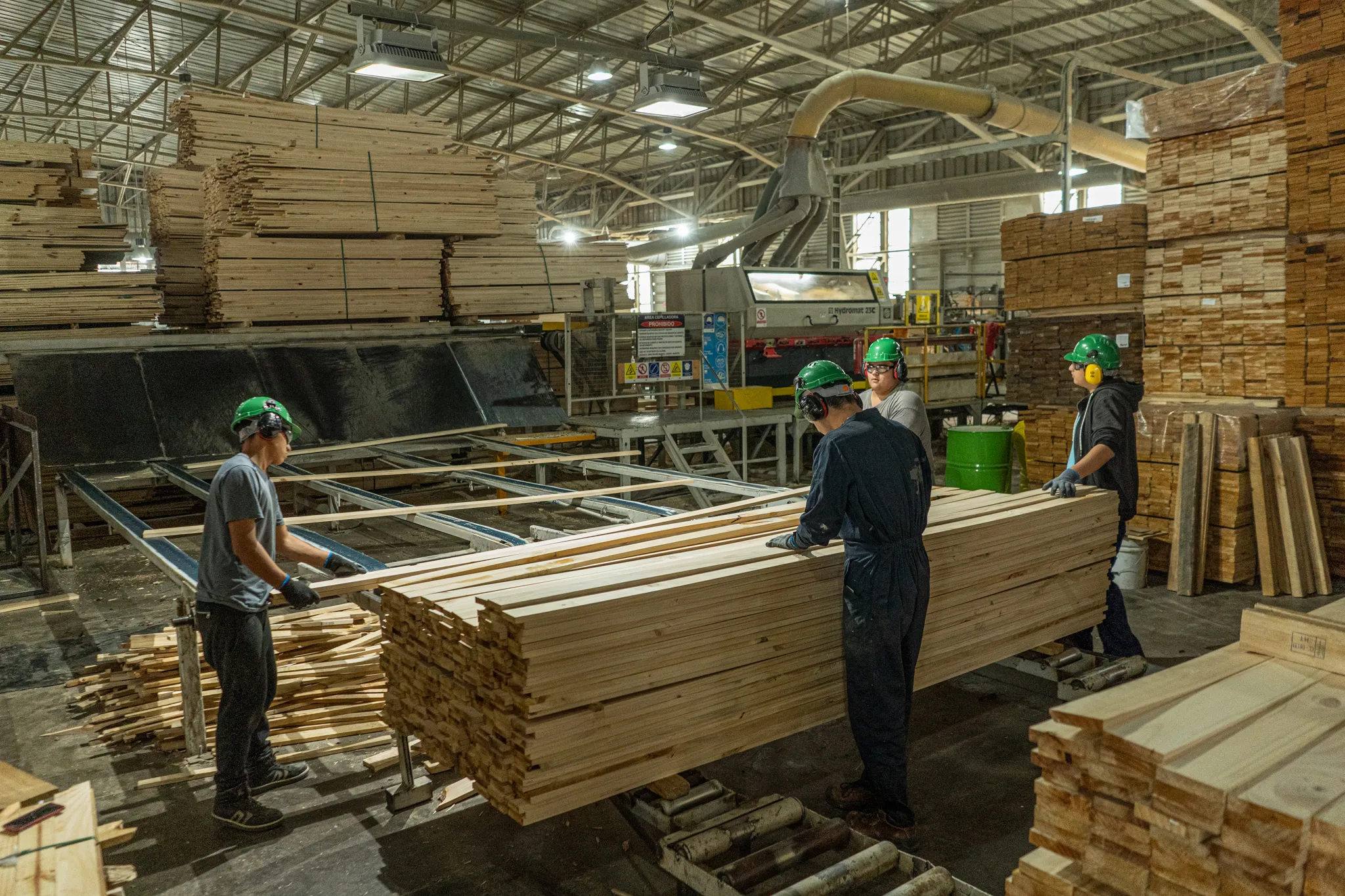
Today’s sawmills use advanced scanners, lasers, cameras, and computer software to determine exactly where each board should be trimmed. These systems identify defects and calculate the best cutting points to maximize both lumber quality and recovery. The result is stronger boards, less waste, and more efficient use of every tree.
A Small Cut That Makes a Big Difference
Trimming may only remove a few inches from a board, but it plays an important role in producing high-quality lumber. It improves strength, appearance, consistency, and usability while helping sawmills get the most value from every log. The next time you see a neatly stacked pile of lumber, remember that every clean, square board has been carefully trimmed to meet the standards builders rely on every day.