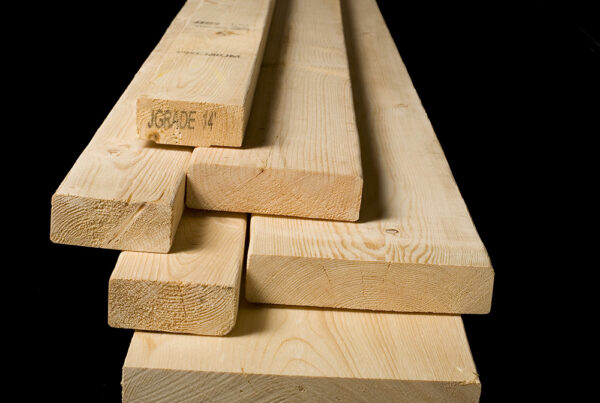


Every tree carries a record of its life inside its trunk. Those familiar rings you see on the end of a board aren’t just patterns, they’re a timeline. Each ring tells the story of changing seasons, weather, and the conditions the tree experienced while it was growing.
One Ring Equals One Year
In most climates, trees produce one growth ring each year. During the spring, they grow quickly, forming lighter-colored wood. Growth slows in late summer and fall, creating darker, denser wood. Together, these layers form a single annual ring.
Wide Rings Mean Fast Growth
When a tree has plenty of water, sunlight, and nutrients, it grows faster and produces wider rings. These years often reflect ideal growing conditions and healthy forest environments.
Narrow Rings Tell a Different Story
Thin rings often indicate difficult growing years caused by drought, cold temperatures, insect damage, wildfires, or competition from nearby trees. Even decades later, those challenging years remain permanently recorded inside the wood.
Scientists Can Read the Past
The study of tree rings, called dendrochronology, allows scientists to estimate a tree’s age and even reconstruct past climates. By comparing ring patterns from many trees, researchers can identify droughts, floods, wildfires, and other environmental events that occurred hundreds or even thousands of years ago.
Builders See More Than Just Age
Growth rings also influence the characteristics of lumber. Tight, closely spaced rings are often associated with slower-growing trees and can contribute to dense, stable wood. While ring spacing isn’t the only measure of quality, it provides valuable insight into how the tree developed.
Every Board Is Unique
No two trees experience the exact same conditions. That’s why every board has its own grain pattern, ring spacing, knots, and natural characteristics. Every piece of lumber tells the unique story of the tree it came from.
The Bottom Line
The next time you look at the end of a piece of lumber, you’re looking at decades of history. Every ring represents another year of growth, making each board a natural record of the seasons, challenges, and environment that shaped it.