
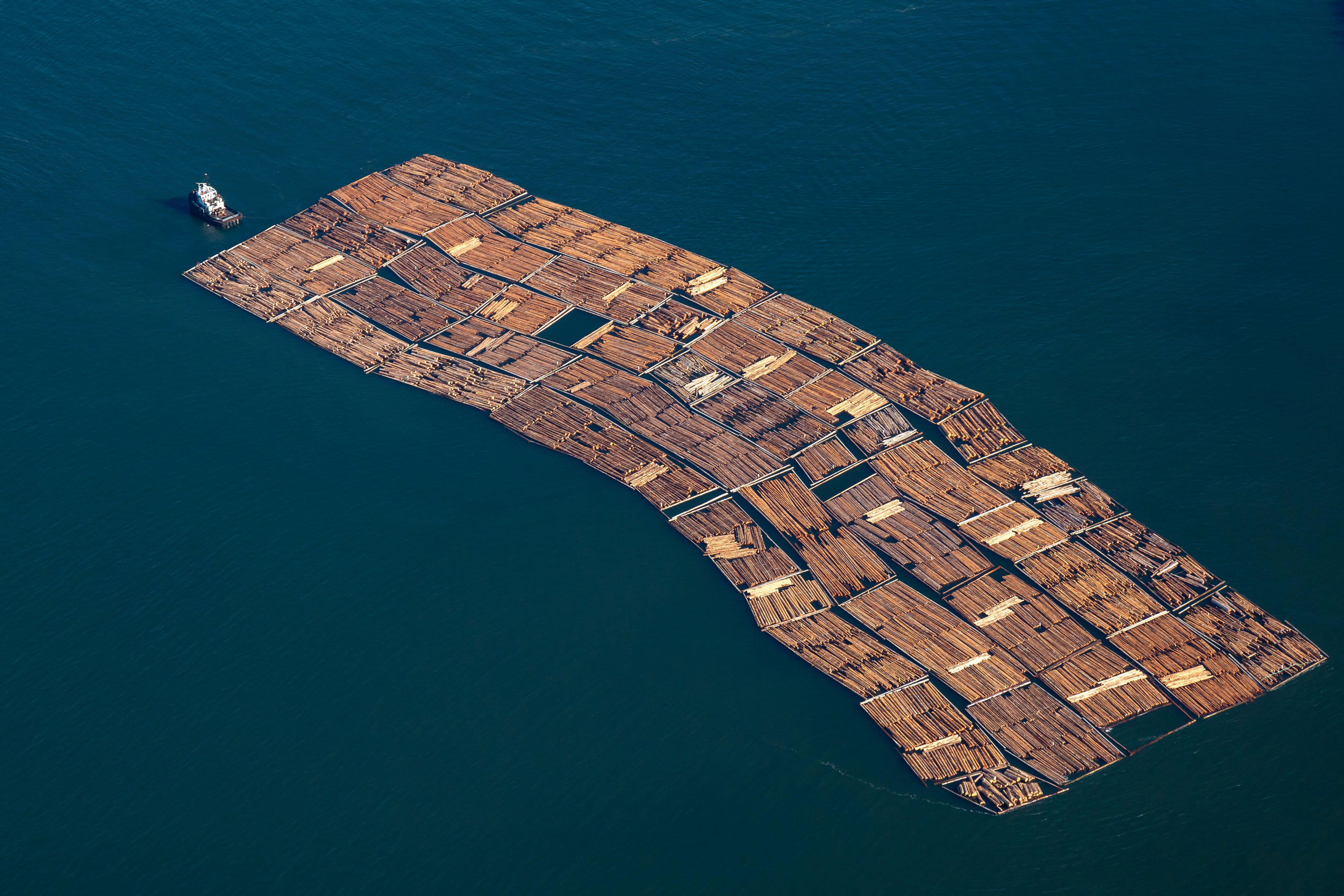
When people think of moving lumber, they picture trucks, railcars, or cargo ships. But one of the largest lumber shipments ever assembled wasn’t loaded onto a vessel at all. It was the vessel. In the early 1900s, lumber companies on the West Coast built enormous floating log rafts that were towed hundreds of miles down the Pacific Ocean. The largest of these carried an astonishing 11 million board feet of timber, making them some of the biggest single lumber shipments ever moved.
A Floating Forest
These giant rafts measured up to 700 feet long and were constructed by chaining thousands of logs tightly together into one massive floating platform. Powerful tugboats then towed the raft from the forests of the Pacific Northwest to sawmills in California, a journey of hundreds of miles through open ocean. From a distance, the raft looked less like cargo and more like a floating island of timber.
Why Build Something So Massive?
At the time, transporting millions of board feet by ship was expensive and required multiple trips. By floating the logs themselves, companies dramatically reduced transportation costs and moved enough timber in a single journey to keep large sawmills supplied for weeks. It was one of the most efficient lumber transportation methods ever developed.
The Challenges
Moving 11 million board feet across the Pacific wasn’t easy. Storms, rough seas, and powerful ocean currents constantly threatened to break the rafts apart. If the chains failed, thousands of logs could scatter across the coastline, creating major navigation hazards and enormous financial losses. Eventually, after several high-profile accidents, the practice was discontinued.
How Big Is 11 Million Board Feet?
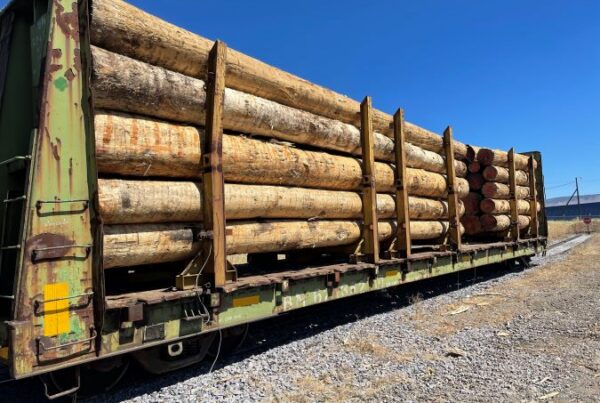
The numbers are almost impossible to visualize. Eleven million board feet is enough lumber to frame well over 700 average-sized homes. Today, it would take dozens of fully loaded railcars or more than 100 highway truckloads to move the same amount of material.
The Bottom Line
Although modern transportation relies on trucks, rail, and cargo ships, few shipments have ever matched the sheer scale of these historic floating log rafts. Carrying up to 11 million board feet of timber in a single tow, they remain one of the greatest engineering and logistical achievements in the history of the lumber industry.