

Most people know wood floats, but not everyone realizes that some species float much higher than others, and a few are so dense they actually sink. The difference is not luck or the size of the board. It comes down to the wood’s natural density. Every tree species has a unique cellular structure that determines how heavy it is, making this one of the most interesting facts about wood science.
It All Comes Down to Density
Density is simply how much mass is packed into a certain amount of space. Water has a density of about 62.4 pounds per cubic foot, so any piece of wood with a lower density will float. The farther below that number a species is, the higher it will sit on the water. If a wood species is denser than water, it will sink.
Different Species, Different Results
Not all trees grow the same way. Species like Eastern White Pine, Spruce, and Douglas Fir have relatively lightweight wood with more air space inside their cells, allowing them to float easily. Denser species like Oak sit much lower in the water, while some tropical hardwoods are heavy enough to sink completely despite looking similar on the outside.
Moisture Changes Everything
Freshly cut, or “green,” lumber contains a significant amount of water inside its cells. That extra moisture increases its weight, causing it to float lower than kiln dried lumber. As wood dries, much of that moisture leaves the cells, reducing the board’s weight while maintaining nearly the same size, which is why dry lumber generally floats higher.
Rivers Were the Original Highways
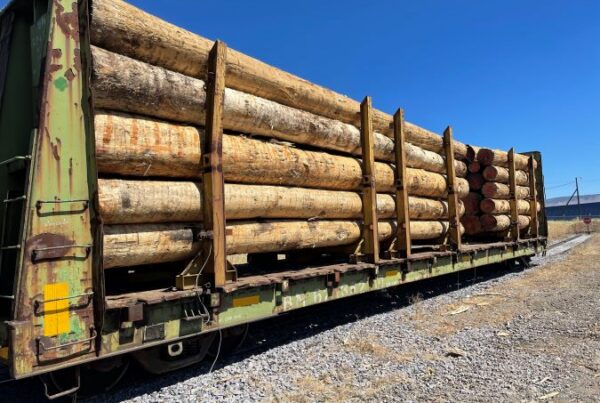
Before trucks, trains, and highways, rivers were one of the lumber industry’s most efficient transportation systems. Loggers harvested trees upstream and floated them downstream to sawmills, sometimes moving thousands of logs at once. Species that floated well were naturally easier and less expensive to transport over long distances.
Why Density Still Matters Today
Although logs are no longer floated to market in most places, density still plays a major role in how lumber performs. It affects strength, weight, fastener holding ability, machining, shipping costs, and the best applications for each species. Understanding density helps builders and manufacturers choose the right wood for every project.
The Bottom Line
Wood floats because it is generally less dense than water, but every species has its own unique density and characteristics. That is why two boards of the same size can behave very differently on the water, and why understanding wood species is just as important as understanding dimensions or grades. It is another example of how there is much more to lumber than meets the eye.